S2K / Alarm response
AI Control Room for Keyholding, Alarm Response & Mobile Security: S2K
Always-on alarm handling, security keyholder dispatch and patrol follow-up—built for concurrent activity, clear reporting and a growing response operation.
Opens your email app. Or email azhar@applied-agentics.com.
01 / Context
Coordinating keyholding, alarm response and mobile security
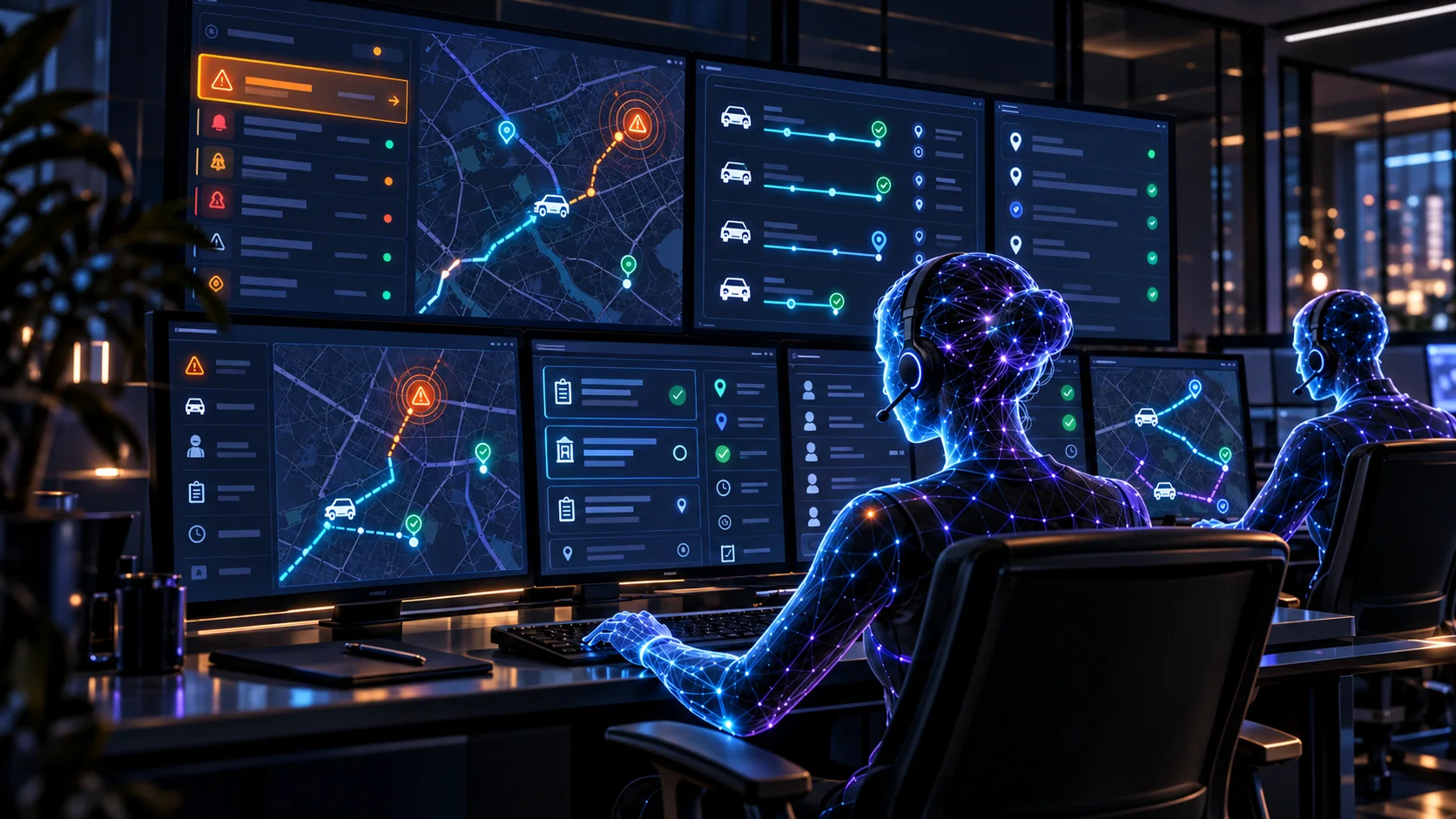
For S2K, the control room connects alarm activations with the people who can respond. It coordinates security keyholders and mobile patrols, keeps progress in view and manages vacant property checks and time and attendance alongside the response workload.
02 / The challenge
The challenge of handling incidents around the clock
Each activation needs context: where it came from, what the site instructions say and who is authorised to respond. The work continues after dispatch, as patrol progress, exceptions and the final outcome need to be followed and recorded. S2K’s previous staffed control-room workload covered this operational coordination.
03 / The operation
How S2K uses AI to coordinate its response operation
Alarm activations
The control room handles notifications under the agreed instructions. Some S2K alarms arrive via an existing external ARC arrangement.
Security keyholder dispatch
It identifies and contacts the agreed security keyholder or response team for an activation.
Mobile patrols
It coordinates dispatch, keeps patrol progress in view and surfaces exceptions needing attention.
Vacant property checks
It keeps scheduled checks within the same operational picture and follows up outstanding activity.
Time and attendance
It checks attendance information and routes discrepancies for review.
The advantage
More than hours saved: a control room built for response
Always-on alarm handling
AI operators do not need meal breaks or sleep and do not lose concentration overnight. Keep the alarm workflow running with agreed fallback arrangements.
Handle surges in parallel
Configure concurrent activation and dispatch workflows for an agreed peak load instead of putting each event into a single-operator queue.
Keep patrols in view
Continue progress checks, chase missing updates and escalate unresolved issues while other activations are handled.
Develop and adapt patrol routes
A capability to scope for your deployment
Plan around site locations, scheduled vacant-property checks, response priorities and team availability as the workload changes.
Reporting grounded in activity
Use timestamped dispatch, check-in, property-check and completion records, alongside time and attendance, to distinguish completed work from unresolved exceptions.
04 / Example process
From alarm notification to patrol dispatch and closure
This is an illustrative workflow based on the confirmed operation, not a record of a specific incident.
- 01
Receive activation
An alarm notification arrives from an agreed source, including an existing ARC for some activations.
- 02
Read site instructions
The relevant response procedure and authorised contacts are checked.
- 03
Coordinate response
A security keyholder or mobile patrol is contacted and dispatched as appropriate.
- 04
Monitor progress
The response is followed, with unresolved exceptions escalated to a person.
- 05
Record outcome
The response steps and final disposition are captured for review.
Illustrative workflow — not a client event log.
05 / Accountability
Site instructions, escalation and incident records
Site procedures and authorised contacts determine the response. When instructions cannot settle an exception, the workflow calls in a person rather than treating the issue as closed. The incident record helps S2K see what was done and what remains outstanding. Compatible integrations and any direct receipt from site hardware are scoped and validated per deployment; existing accredited routes remain where required.
06 / Outcome
The results at S2K
108 hoursof control-room labour removed per week
Reported by S2K
Routine coordination no longer occupies those staffed control-room hours each week. S2K can direct more attention to response decisions and unresolved exceptions while its alarm, patrol and attendance workflows stay connected.
07 / Your business
Bring AI coordination to your response business
We would start with your existing alarm routes, site instructions, dispatch procedures and patrol teams. From there, we can assess how AI coordination fits your private-response workflow, what integrations are feasible and which decisions stay with your people.
S2K is an initial deployment in a business under shared ownership with Applied Agentics’ founders. Its result is presented in that context.
Next step
Discuss your response operation.
Opens your email app. Or email azhar@applied-agentics.com.